Raccoon Removal in Indianapolis - Done So They Can’t Come Back
A raccoon in your attic isn’t a trapping problem. It’s a building problem with an animal in the middle of it. We find the entry, account for kits if it’s spring, get the family out alive, and seal the structure so the next raccoon walking your roofline can’t get in either. Two-year warranty on every exclusion we build.
Why most raccoon jobs go wrong, and what we do differently
Adult female raccoons in central Indiana den from late February through June. That window matters more than anything else on the job. If a homeowner calls us in April hearing thumps at 2 a.m., we don’t set a trap on the roof and call it a night. We assume kits are in the wall until proven otherwise, because they almost always are.
Here is the failure mode we see two or three times a month after a homeowner or a budget operator tries to handle it solo. Someone catches the female in a cage trap on the roof. They feel good about it. They seal the gable vent the next morning. Inside the soffit cavity, three or four kits that can’t walk yet starve over the next 5 to 8 days. The smell is unmistakable around day 10. The drywall has to come down. Insulation has to be hauled out. Framing gets cut open to find the carcasses. That’s a $4,000 demolition bill on top of the trapping bill, plus the smell never fully leaves the cavity it sat in. We’ve been called in to clean up that mistake more times than we’d like.
Our protocol on a spring job is different. We do a full attic inspection first - thermal where it helps, headlamp and a good ladder always. We’re looking for the den site, kit vocalizations, scat patterns, the polished hand-rails on the rafters where she climbs in and out. Once we know where the kits are and how many, we use a sister-and-juvenile reunite protocol: the female goes into a single-door cage trap baited and positioned right at the entry, kits are removed by hand from the wall cavity, and we reunite them in a reunite box mounted on the exterior of the home. Mom relocates them herself overnight, usually to her secondary den site. That’s how nature handles it when we stop getting in her way.
Late summer and fall jobs are different. By August the juveniles are mobile, so we can run a one-way door on the primary entry and let the family walk out on its own over 3 to 7 nights. No traps required in most cases. Either way, the exclusion work afterward is where the actual value is - cage trapping without exclusion is a $200 catch-and-release that gets you another raccoon in the same hole by September.
The last thing worth saying: raccoon roundworm is real. Baylisascaris procyonis eggs survive in attic insulation for years and aerosolize when you disturb them. If there’s a latrine site - and there almost always is when raccoons have been in an attic more than a few weeks - that insulation needs to come out, not get stepped over. We carry P100 respirators and tyvek for a reason.
Our process for a raccoon job, start to finish
-
01
Full inspection, inside and out
We walk the roof, every soffit return, every gable vent, every dormer corner. Then we get in the attic. We’re mapping the entry, secondary entries (there are almost always two), the den site, and whether kits are present. No quote happens before the inspection is done.
Day 1 -
02
Removal matched to the season
Spring with kits: reunite protocol, mom trapped at entry, kits hand-removed and placed in a reunite box. Late summer/fall: one-way door over the primary entry with secondary entries sealed first. We never seal an active hole without confirming the family is out.
On the job -
03
Permanent exclusion build
Hardware cloth in 1/2" galvanized mesh on gable vents, foundation vents, and ridge gaps. Galvanized steel flashing on soffit returns and fascia. Polyurethane sealant on the perimeter. We don’t use expanding foam alone for anything load-bearing - raccoons chew through cured foam in about four minutes.
On the seal -
04
Attic decontamination
If there’s a latrine site, contaminated insulation gets bagged and removed. We treat the cavity with an enzymatic cleaner that breaks down scent markers so the next raccoon walking your roofline doesn’t read it as “den here.” Re-insulation is quoted separately if the loss area is significant.
Before we leave -
05
Two-year warranty walk 2-yr warranty
Before we leave, we photograph every closure. You get the file. If a raccoon gets through anything we built within two years, we come back and fix it at no cost. That’s the deal.
Final visit
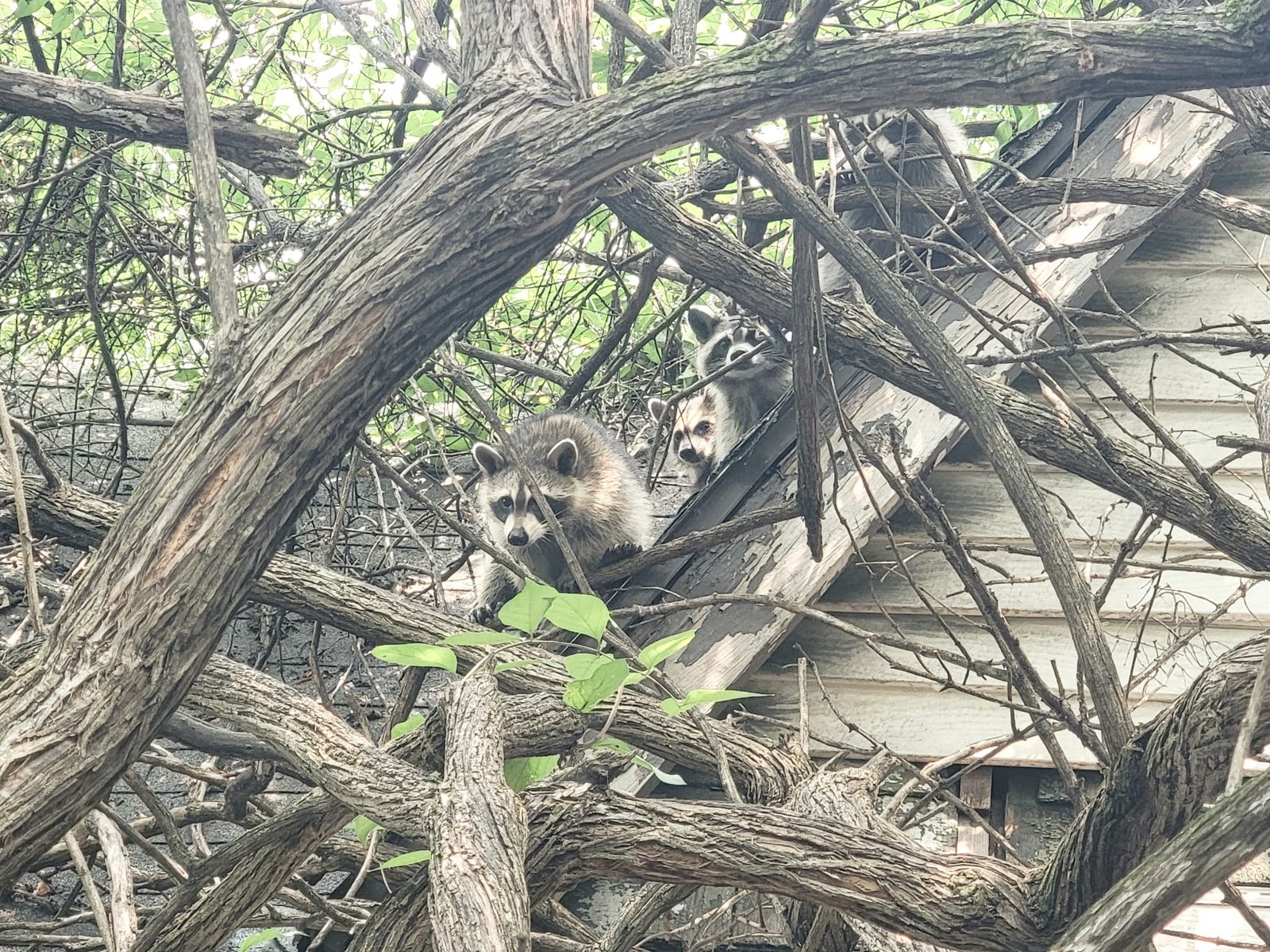
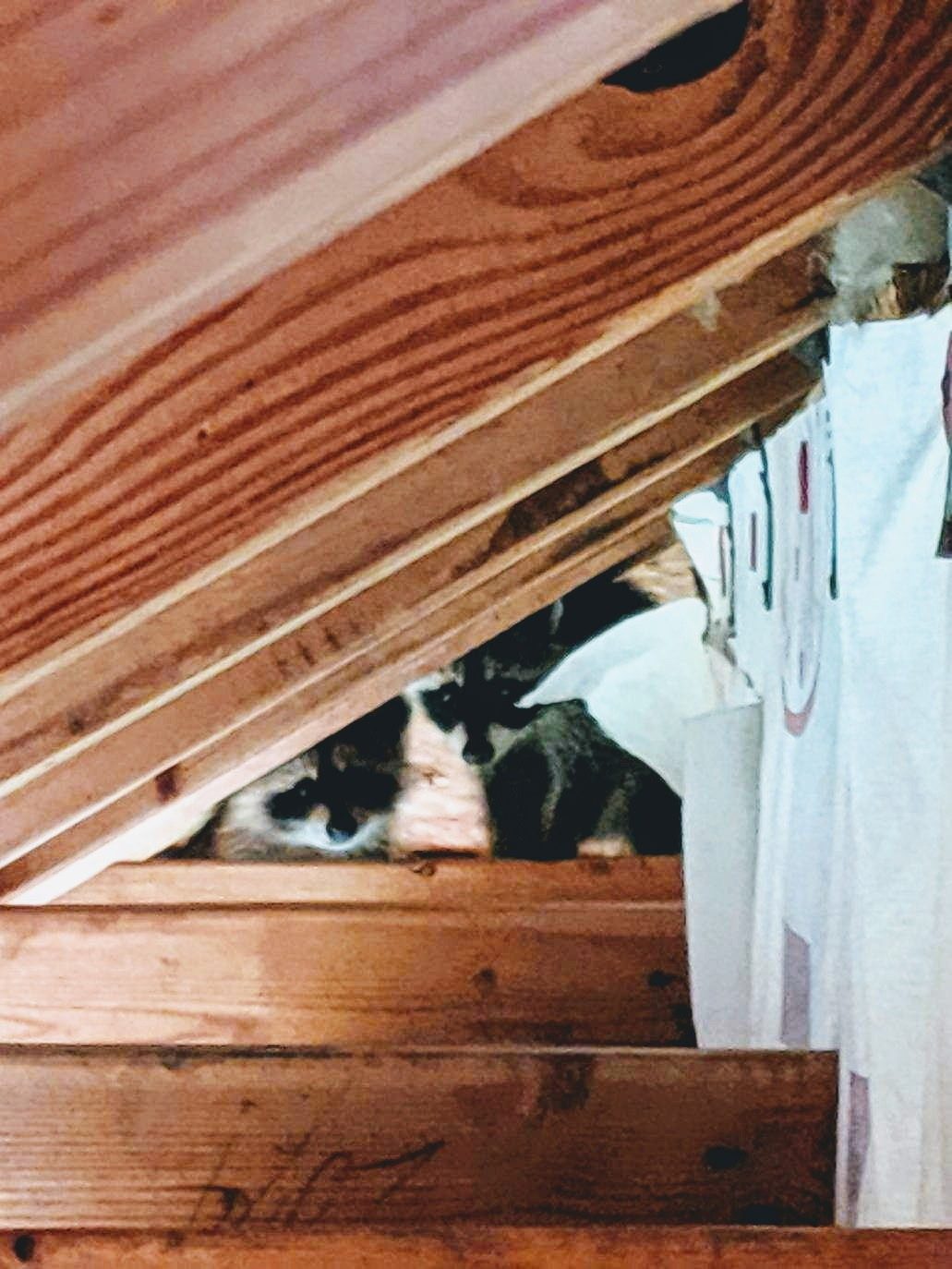
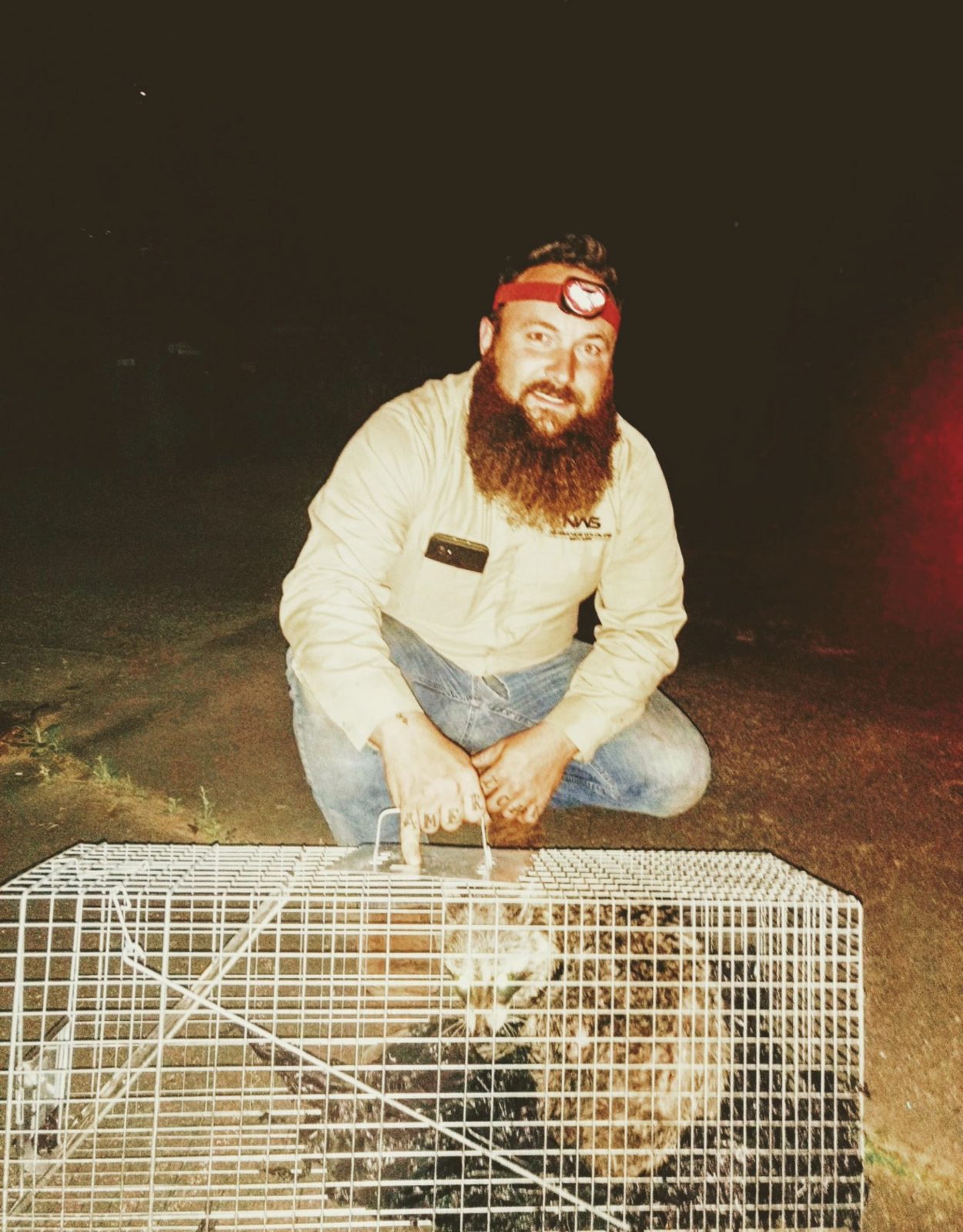
Real raccoon calls, our photos
Real price ranges for raccoon work
Every house is different. A single-story ranch with one gable vent is not the same job as a three-story home with multiple dormers and a torn-up roof return. Here’s the honest range we see in central Indiana:
| Job type | Typical range | What drives the price |
|---|---|---|
| Single-entry, no kits, late season | Quoted on-site | One-way door, one closure, basic exclusion |
| Spring job with kits, reunite protocol | Quoted on-site | Hands-in-the-wall work, reunite box, extra trips |
| Multiple entries, dormer or roof return repair | Quoted on-site | Carpentry, flashing, scope of exclusion build |
| Attic decontamination & insulation removal | Typically $3,000 - $6,000 | Square footage of contaminated insulation |
How pricing works: every home is different, so we quote on-site, in writing, before any work starts. As a rule of thumb: trapping starts at $399, most single-story homes come in under $2,000 for complete removal and exclusion, and full attic restorations typically run $3,000 to $6,000. Your free inspection gets you an exact number with no surprises.
If you’ve been quoted something well under $400 for a raccoon in an attic, ask what’s actually being done. Most of those quotes are catch-and-release with no exclusion, which means you’ll have another raccoon in the same hole inside a season.
Source & further reading: CDC on Baylisascaris procyonis, Indiana DNR nuisance wildlife rules.
Raccoon questions homeowners ask us
Raccoon weight gives them away. You’ll hear what sounds like a toddler walking on the joists, not scrabbling. Squirrels are loud but light. Bats are silent except for chirping. If something is heavy enough to shake the drywall when it moves, it’s a raccoon or, less often, a possum.
You can, and we’d ask you not to. If she has kits and you remove her, the kits die in your wall. If you don’t fix the entry, you have a new raccoon in two weeks. Trapping without exclusion is the most common reason we get called back to a house that already paid someone else.
Yes, particularly in homes with young kids or anyone immune-compromised. The eggs are sticky, persistent, and aerosolize when insulation is disturbed. If there’s a latrine site we’ll show you the photos and walk you through what should come out and what can stay.
Inspection day one. Removal phase is typically 3 to 10 days depending on whether it’s a one-way door situation or a reunite protocol. Exclusion build takes one full working day for most homes. Decontamination is a separate day if it’s needed.
Indiana law on raccoon relocation is restrictive and survival rates of relocated adults are poor. Where Indiana DNR rules require it, we euthanize humanely on site. Where reunite protocols apply, the family stays together and moves to her secondary den. We’ll be straight with you about what’s legal and what’s humane on your specific job.
Sometimes for the damage, almost never for the trapping. We provide itemized invoices with photos that homeowners use to file claims for chewed wires, ruined insulation, and ceiling damage. Your adjuster will tell you what’s in scope.
Let’s get out and look this week.
Call James at (317) 512-3779 or email james@nwsremoval.com. Free inspection. We’ll show you what’s up there, what we’d do about it, and what it’ll cost - in writing, on the spot.