Anderson Wildlife Removal - Madison County Coverage
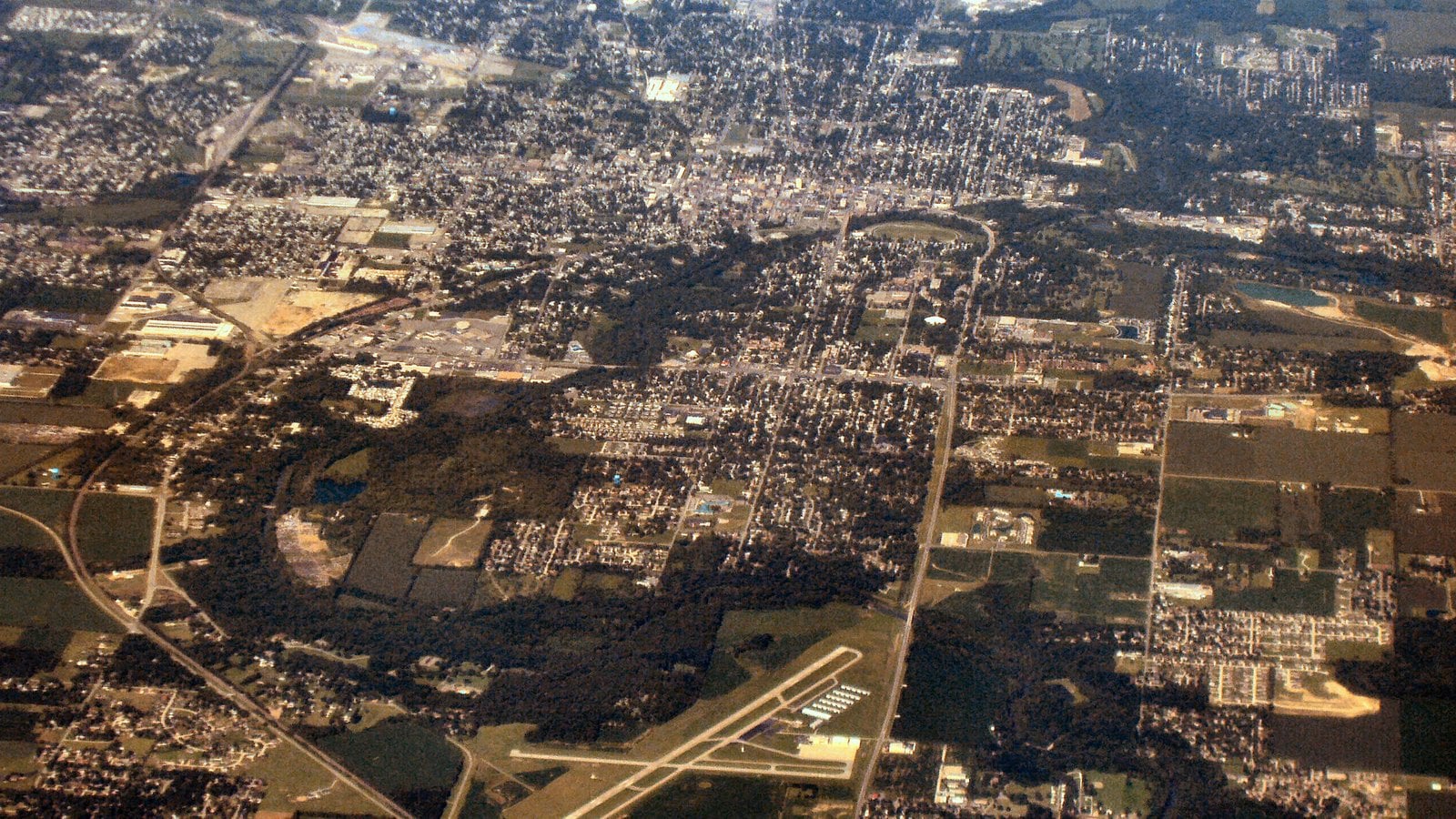
Anderson’s housing stock runs from post-industrial downtown rowhomes to Edgewood Country Club estates, with a wide ring of mid-century neighborhoods in between. Each section has its own entry patterns.
What we see across Anderson
Downtown Anderson - the older blocks around Meridian and Main, the row homes off Jackson and 8th Streets - is the city’s most distinctive housing stock. Late 1800s through 1930s, often with shared party walls, original chimneys, and wood window and door framing that has been painted-over and patched for a century. Squirrel and bat entries through compromised soffits and ridge caps are common here. Shared-wall homes complicate exclusion work because you have to consider the neighbor’s entry points as well as your own; we coordinate when needed. Chimney caps are the single most-installed item in this part of the city.
The area around Anderson University and the older neighborhoods to its north and east are heavy on rental and former-rental stock, much of it 1920s through 1960s construction. Deferred maintenance creates more entry points than you’d see in similar-age housing elsewhere - chewed soffit corners that have been there for years, gable vents with no screening at all, attic access hatches that don’t seal. We do simple exclusion work in this area, often with a lot of secondary sealing in the same job because the whole roofline tends to have multiple problems.
Edgewood, the country club area, and the newer Anderson stock on the south and east sides of town are 1980s through current. The same patterns we see in newer construction across central Indiana apply: gable vent failures, loose ridge caps, dryer vent chewing. Standard squirrel and raccoon work, two-year warranty.
Madison County overall has more skunk and groundhog work than the Hamilton County core because the rural-residential lots come up faster as you head out of the city. We’ve done a lot of under-deck and crawlspace work in the unincorporated areas around Anderson, Pendleton, and points east.
What changes here
Indiana DNR rules apply uniformly across the state, so the regulatory side of nuisance wildlife work is the same in Madison County as it is in Hamilton. The practical differences are housing age (a bigger share of pre-1940 stock than the Hamilton suburbs), lot size variation (urban-dense downtown alongside multi-acre rural-residential), and the rental/former-rental concentration around AU which tends to concentrate deferred-maintenance entry points.
Anderson is a little further from our base than the Hamilton County cities, but we run jobs in Madison County every week. Response time is typically 48-72 hours, faster for active emergencies.
Anderson inspections are free
Call the owner’s direct line or book online. Written quote before any work starts.
Call (317) 512-3779 Book Free Inspection