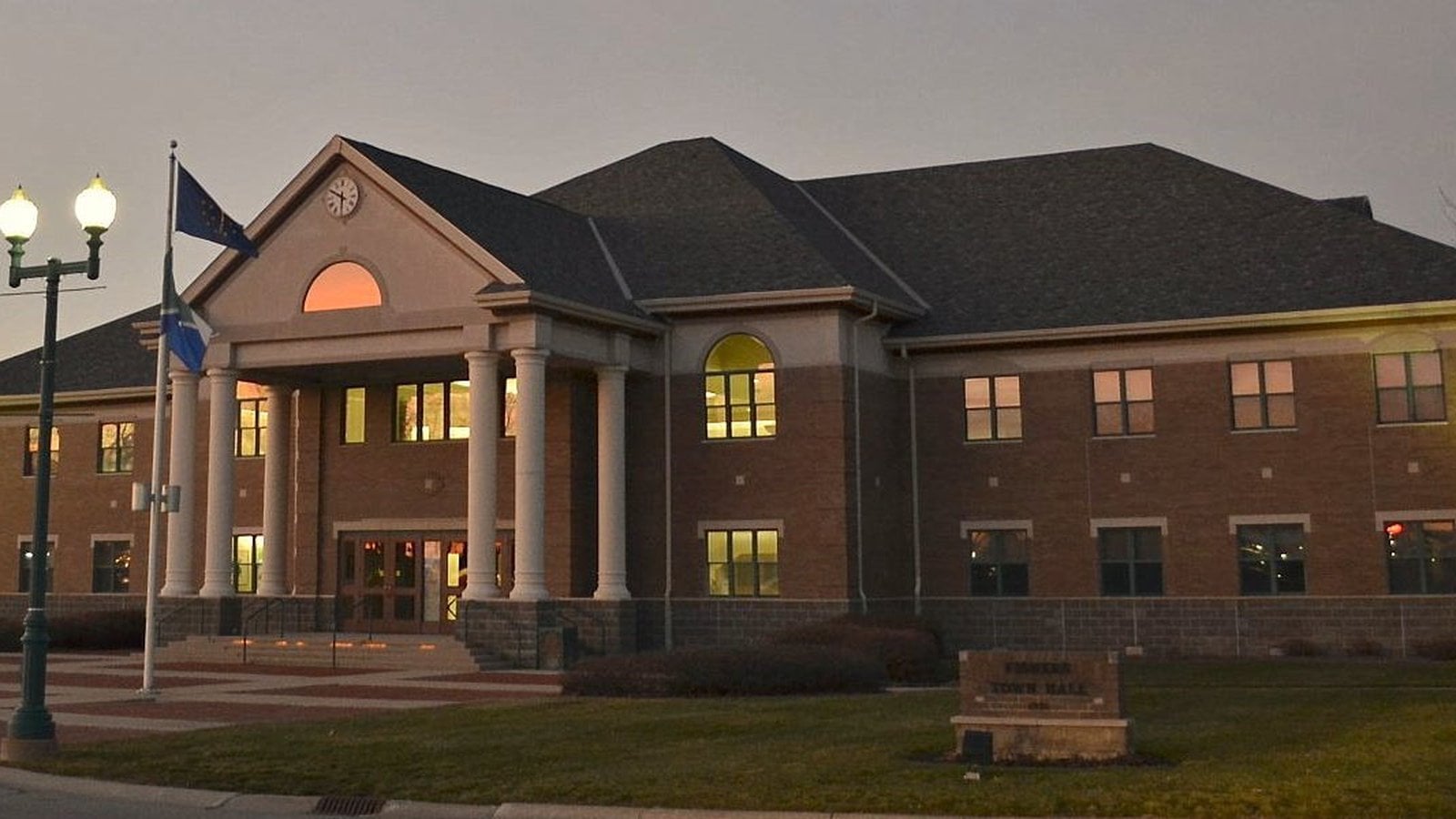
Fishers Wildlife Removal - Geist to Saxony, Top-Rated
Fishers is one of our highest-volume cities. Newer construction predominates across most of the city, the Geist Reservoir corridor has its own set of water-adjacent wildlife patterns, and the Saxony/Olio Road growth area has the predictable failure modes of fast-built post-2005 subdivisions. We work Fishers weekly and the drive from our shop is short.
Fishers housing patterns
Fishers has three distinct housing zones and the wildlife work shifts depending on which one your house is in.
The newer construction belt covers most of the city - Saxony, the Olio Road corridor, the subdivisions north of 131st, the developments east of I-69. Mostly post-2000 building, manufactured trusses, vinyl and Hardie siding, prefab dormers and gable vents. The wildlife work here follows the standard newer-construction playbook: ridge-cap gaps, gable-vent screen failures, soffit returns on weather-facing facades.
The Geist Reservoir corridor - the homes along Geist Reservoir itself, plus the surrounding neighborhoods (Bridgewater, Bay Creek, Sandstone Village, the homes along Olio Road south of 126th) - has a different wildlife profile. Water-adjacent homes have boat houses, lakeside decks, water-edge crawl spaces, and proximity to a continuous riparian corridor that supports denser raccoon, otter, and muskrat populations than anywhere else in the metro.
Older Fishers - the original downtown around 116th and Lantern Road, plus the older neighborhoods immediately around it - has 1960s-1980s ranches and split-levels with the entry patterns of that era (gable vents, original soffit construction, real chimneys with weathered crowns).
What we see in Fishers attics most often
Raccoons across all three zones. Hamilton County's raccoon population is robust everywhere, and Fishers is no exception. The water-adjacent neighborhoods have higher density (raccoons love water edges), but every part of the city sees steady spring raccoon work. February through June is peak.
Gray squirrels everywhere. Wooded Fishers subdivisions support strong squirrel populations and the standard squirrel entry patterns (gable vents, roof-edge gaps, attic-vent failures) are constant work. We see the highest activity in late summer and late winter.
Bats in older Fishers and along Geist. The older downtown housing has the construction features bats want. The Geist corridor has both the older housing and the insect-rich water environment that supports bat foraging. Bat colonies are less common in the newer construction north of the city, where building details are tighter.
Mice in newer construction. Same pattern as Carmel - newer subdivisions often have more mouse pressure than older homes because of the small gaps at sill plates, exterior penetrations, and vent louvers.
Skunks and opossums under decks. Most Fishers homes have decks. Decks built without proper foundation flashing become skunk and opossum apartment buildings. We do a steady stream of deck-skirting and foundation-screening work.
Fishers-area specific notes
Water-adjacent properties add unusual species. Homes directly on Geist or on the connecting waterways occasionally have otter, muskrat, beaver, or mink issues that don't show up anywhere else in our coverage area. Otters under boat houses, muskrats burrowing into shoreline embankments, beavers taking down trees along the waterfront. These are uncommon but real, and they need different handling than standard attic work.
The Conner Prairie corridor running along Allisonville Road has more raccoon and squirrel pressure than the city average. The protected woodland and the museum's land support dense urban-edge wildlife populations that move into the surrounding neighborhoods.
HOA situations are common. Most Fishers subdivisions have HOAs. Our work generally fits within standard exterior-maintenance approvals and we can provide documentation for boards that need it.
Crawl-space pressure. The Geist-area homes more often have crawl spaces than the rest of Fishers, and crawl-space sealing (vapor barriers, foundation vent screens, sill-plate sealing) is a meaningful share of the Geist-area work we do.
Common Fishers questions
We have a boat house on Geist. Something is living under it. What do you do about that?
Depends on the species. If it's raccoons or opossums, we can trap and exclude with proper foundation-level sealing. If it's otters or muskrats, the work is different - shoreline barrier installation, water-edge fencing, and habitat modification. We've done this kind of work on Geist enough to know what's involved. Inspection first, then a scope.
Our subdivision in Saxony has bats showing up on three houses in a row. Are they related?
Probably the same colony moving among homes with similar construction. If your subdivision was built with identical gable-vent designs, the same opening that the bats found on the first house exists on the others. We can scope all three together if the homeowners coordinate, and it often saves money to do it that way.
I'm in a 2018 build north of 146th. Why am I having any wildlife at all?
Even newer homes have a few standard weak points - the dryer and bathroom-fan exterior vents (manufacturer-installed louvers often fail), the chimney chase if there is one, and the ridge cap if the original installation was done quickly. Newer homes have fewer total openings but the ones they have are predictable.
Do you work near Hamilton Southeastern schools and on the busier streets?
Yes. Traffic and schedule windows are factors we plan around but they don't change the work. For homes on busier roads we schedule work outside peak traffic hours when possible.