Westfield Wildlife Removal - Grand Park to Bridgewater
Westfield is one of the fastest-growing cities in Indiana and the housing stock reflects it - predominantly new construction, larger lots than Carmel or Fishers, and a meaningful share of properties bordering open land near Grand Park. The wildlife work here follows the standard newer-construction patterns plus more exterior work (sheds, decks, outbuildings) than the rest of Hamilton County.
Westfield housing patterns
Most of Westfield was built after 2000. Bridgewater Club, Wood Wind, Maple Knoll, Westfield Crossing, and the subdivisions along Wheeler Road and Tomlinson Road are predominantly post-2005 construction. Manufactured trusses, vinyl and Hardie siding, prefab gable vents, two-story homes the rule and three-story builds increasingly common. Larger lots than the comparable Carmel and Fishers subdivisions - half-acre and acre lots are routine here in a way they aren't further south.
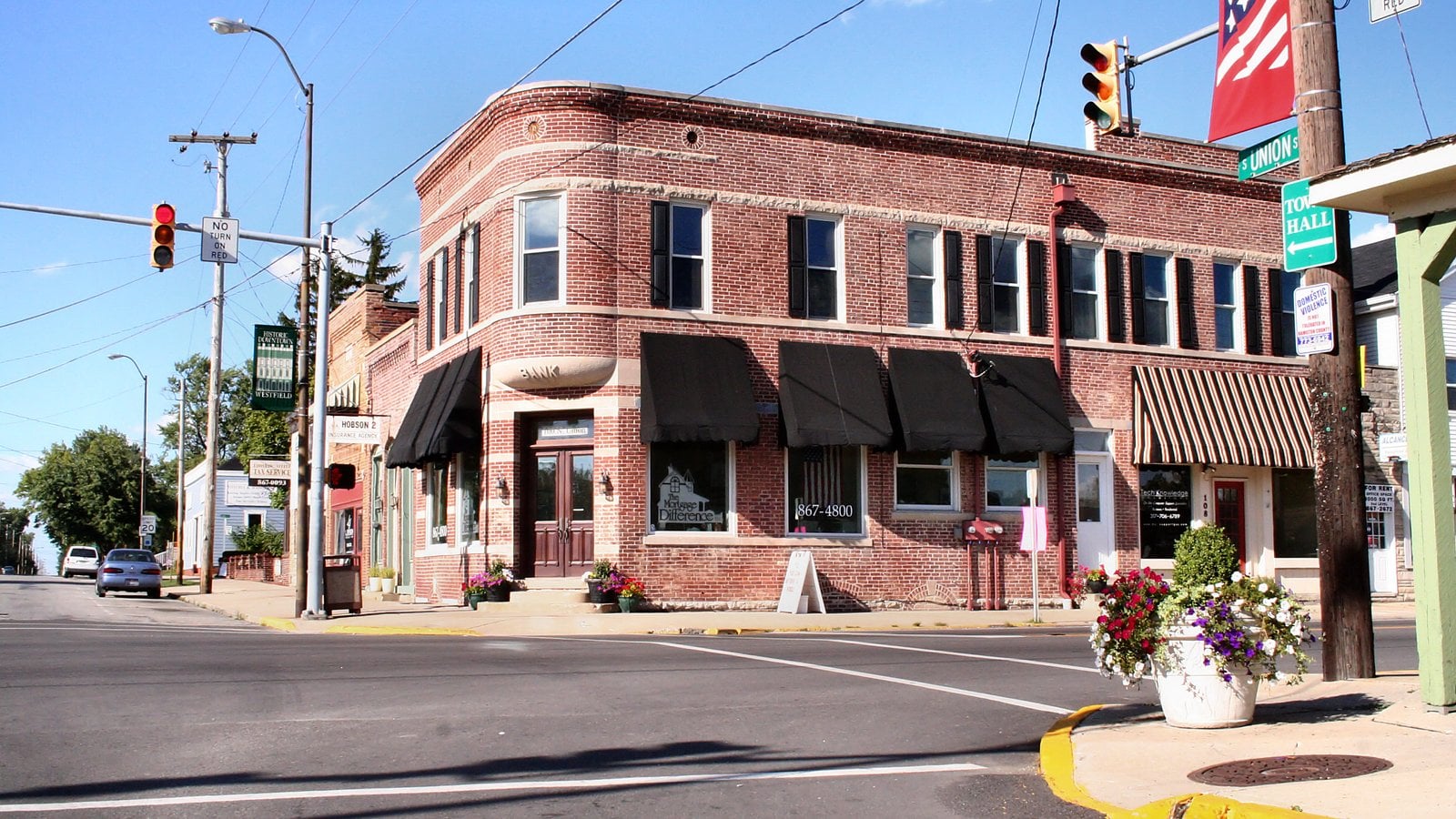
Central Westfield - the original town around Park Street and Union Street - has older housing, 1920s-1970s, with the traditional construction details (real chimneys, original soffits, gable vents that have been there for decades). This is a small portion of the city by total inventory but a meaningful share of the older-construction wildlife work we do in Westfield.
The Grand Park corridor and the areas north and west of it have the largest lots and the most rural-edge conditions in the city. Homes here often have detached garages, sheds, pole barns, and other outbuildings, plus more wooded acreage adjacent to open farmland or undeveloped land. This changes the wildlife mix meaningfully.
What we see in Westfield attics most often
Newer construction has predictable entry patterns. The post-2005 subdivisions in Westfield show the standard manufactured-truss failure modes - small gaps where the ridge cap meets the truss line, prefab gable vents with screens that weren't installed cleanly, ridge-to-rake transitions that open up after 10-15 years of seasonal movement. The good news: these are predictable failures, easy to identify on inspection, simple to seal.
Raccoons in spring. Same Hamilton County pressure as Carmel and Fishers. February through June, denning females find weak spots in soffits or gable vents and move in. We see the highest concentration in subdivisions backing up to wooded land, which in Westfield includes most of the larger-lot developments.
Squirrels year-round. Westfield's mature subdivisions (the ones built in the early 2000s) now have the tree canopy to support real squirrel populations, and the standard squirrel entry patterns are steady work. Newer subdivisions (under 10 years old) see less squirrel pressure simply because the trees haven't matured.
Bats in older central Westfield. The pre-1970 housing in the central part of the city has the construction features bats want. We see bat colonies here at roughly the same rate as comparable older housing in Carmel's Old Town. Newer construction in Westfield sees very few bats by comparison.
Mice are universal in newer construction. Standard pattern - the post-2005 builds have predictable mouse entry points at sill plates and exterior vent penetrations.
Westfield-area specific notes
Larger lots mean more outbuilding work. A meaningful share of Westfield jobs involve sheds, detached garages, pole barns, and other outbuildings - not just the main house. Skunks under shed slabs, raccoons in pole-barn lofts, groundhogs burrowing under detached garages. We handle these as part of the same job when they show up, and we often inspect them proactively if the property has them.
Groundhog pressure. Westfield has more groundhog (woodchuck) work than the rest of our coverage area combined. The combination of larger lots, more open ground, and properties bordering farmland creates ideal groundhog habitat. Burrows under decks, sheds, foundations, and concrete slabs are common.
Skunk pressure near outbuildings. Same pattern - the rural-edge lots have more skunk denning sites than the denser subdivisions further south. We do steady skunk work in Westfield, especially March through May (mating season and litter season).
Grand Park area and coyote sightings. The undeveloped land around Grand Park and the surrounding agricultural corridors support a coyote population that has been increasing in recent years. We don't do coyote trapping in residential settings (different licensing, different approach), but we do field a lot of calls from Grand Park area homeowners who hear or see coyotes and want to know about exclusion options for pets and outbuildings. The honest answer is usually fencing modification and removal of attractants rather than trapping.
Common Westfield questions
We have a groundhog under our shed. What's involved?
Trap the animal (one-way exit doesn't work well on groundhogs because of how they use burrows), close the burrow entrance, and install a foundation-level barrier around the shed to prevent re-colonization. Total job is usually 3-5 days. Indiana DNR rules apply on disposition. We do this kind of work in Westfield several times a month in spring and fall.
Our 2018 home in Bridgewater Club shouldn't be having problems yet. Why is something in the attic?
Newer construction is tighter than older construction but not airtight. The standard new-build entry points are exterior vent louvers (often poorly installed by the original siding crew), ridge-cap gaps if the original install was rushed, and the chimney chase if there is one. We see plenty of wildlife in 5-15 year old homes - it just usually comes in through one or two specific openings rather than the half-dozen older homes have.
We have a pole barn with raccoons in the loft. Do you work pole barns?
Yes. Pole-barn work is a real part of our Westfield volume. The exclusion approach is different from a traditional roof - we're sealing eave and gable openings at metal-siding joints, ridge vents, and any door-frame gaps. We do this work routinely on outbuildings of all sizes.
My HOA in Wood Wind requires approval. Will that hold up the work?
Usually not. Most Westfield HOAs respond to wildlife exclusion requests within a week because the alternative is structural damage. We can provide written scope and photos for the approval packet. Our work generally isn't visible from the street, which makes HOA approval smoother than work that changes the home's appearance.
Something in your Westfield attic or outbuilding?
Call us at (317) 512-3779. We pick up.
(317) 512-3779-> Email us