Animal-Proofing & Exclusion - The Work That Earns the Two-Year Warranty
Trapping an animal is half the job. Closing the building so the next one cannot get in is the half that holds. Hardware cloth in the right gauge, steel flashing where wood meets masonry, polyurethane sealant where the seam will move. James Shrake, 119 five-star reviews, and a two-year warranty on the exclusion work we install.
Why exclusion is carpentry, not pest work
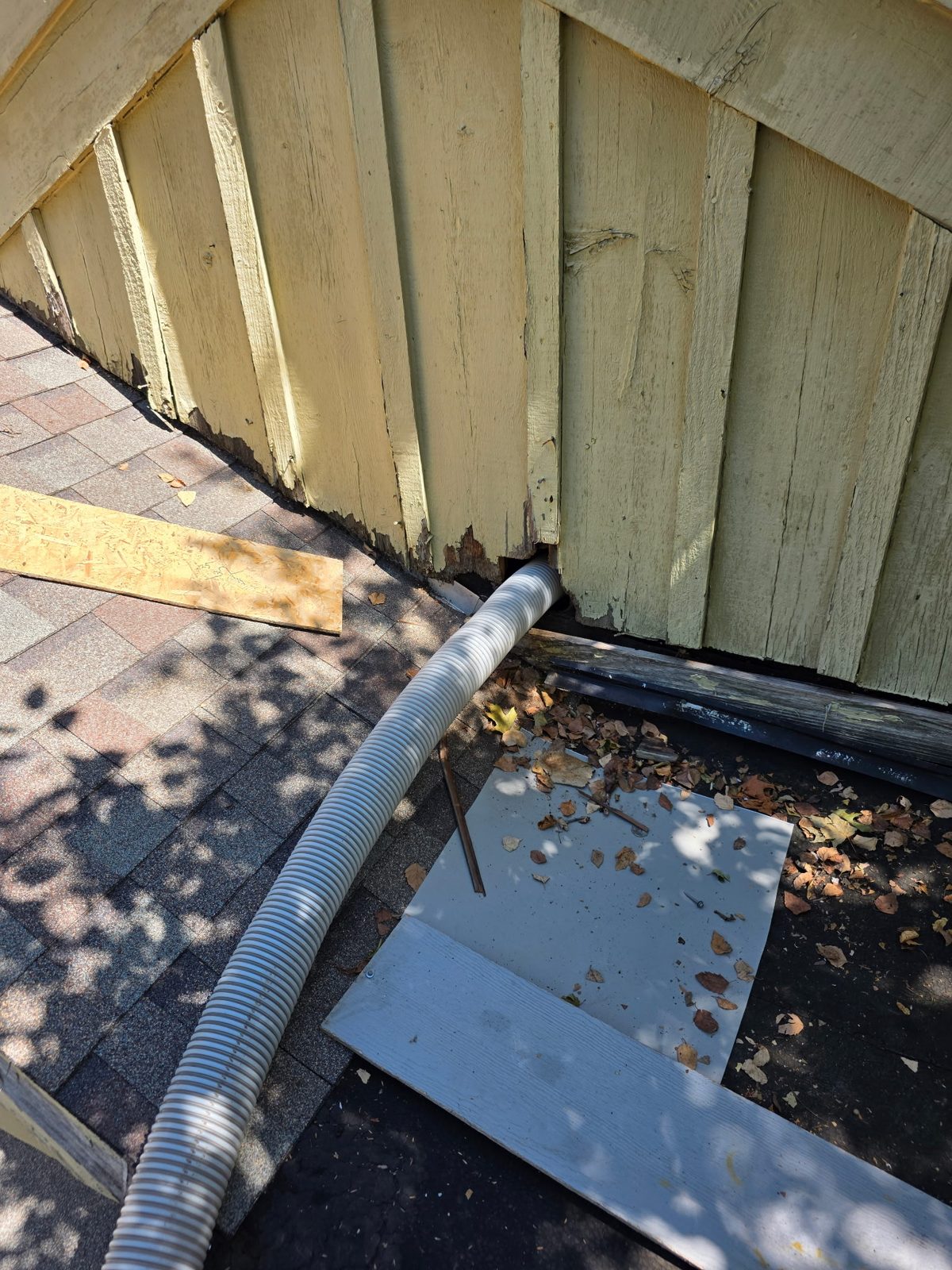
Exclusion is the part of wildlife work that looks the most like carpentry and sheet-metal trade. It is permanent material installed on a building so an animal cannot get through it, cannot chew through it, and cannot dig under it. Done well, the work disappears into the building - the homeowner sees painted trim, the animal sees half-inch galvanized steel set into a sealant bed. Done poorly, you see expanding foam under a soffit, and the squirrel chews through it in an afternoon.
The single biggest mistake in DIY exclusion is the can of expanding foam. Foam is a gap filler. It is not a barrier. A mouse will chew through it in minutes. A squirrel will rip a fist-sized hole in it. Even a bat can push through gaps that foam shrinks away from as it cures. Foam has a place in our toolkit - we use it as a backing material behind hardware cloth on irregular cavities - but it is never the front line. The front line is steel.
The seven entry types we see on most houses
Central Indiana housing stock has a small number of repeat-pattern entry points. Once you know the list, you stop being surprised:
1. Gable vents. The louvered vent at the peak of the gable end. The factory screen is usually plastic mesh that fails within ten years. We retrofit with a half-inch hardware cloth panel inside the louvers, screwed to the frame so a raccoon cannot pry it. Bats need quarter-inch cloth and the install gets a one-way valve for thirty days first.
2. Soffit returns. The little triangular section where the soffit dies into the roof line on a gable. Builder framing rarely closes this cleanly. A squirrel or bat finds the gap within a season. We close with painted aluminum or fiber-cement panel set in sealant, with steel flashing where the wood meets masonry.
3. Fascia gaps. The fascia board pulls away from the rafter tail and a gap opens at the top edge. Squirrels widen this every year. We close with a continuous bed of polyurethane sealant and a steel cap where the gap exceeds three-eighths of an inch.
4. Foundation vents. The brick or block vents at the crawlspace level. Original screens rust out. We retrofit with half-inch galvanized hardware cloth set into the vent frame and anchored to the masonry with stainless screws and lead anchors.
5. Ridge cap gaps. Where the ridge cap shingle ends meet the gable end, a small triangle of attic ventilation often goes unsealed. Bats find this gap first. Quarter-inch hardware cloth set into sealant from inside the attic, with a matching shingle close from outside.
6. Chimney chase seams. The boxed wood chase around a metal chimney pipe is a common point of separation. The seam between the chase top and the chase sides opens up. We close with steel flashing set into polyurethane sealant and trim-screwed at six-inch centers.
7. Dormer corners. Where a dormer roof meets the main roof, the valley shingles and the dormer wall siding rarely meet cleanly. Raccoons and squirrels both work this corner. We close with a custom-bent piece of steel flashing, painted to match.
Materials, by the spec
Hardware cloth: half-inch galvanized for raccoons, squirrels, groundhogs, opossums. Quarter-inch for mice and bats. Quarter-inch is also the right call for any vent the customer wants screened against insects in addition to mammals.
Flashing: galvanized steel for any wood-to-masonry seam, aluminum for trim work that needs to be painted. We do not use plastic flashing for exclusion - UV brittles it within five years and a chewing animal goes right through.
Sealant: polyurethane (not silicone) on any seam that will move with temperature. Silicone fails on wood in five to seven years; polyurethane holds twelve to fifteen and adheres to the steel and masonry without primer.
Paint match: where the work is visible from the ground, we pull a paint sample and match the trim. Exclusion that looks like a repair fails the curb-appeal test even if it works. Done right, the homeowner forgets it is there.
Targeted versus whole-perimeter
Two kinds of jobs. Targeted exclusion closes the specific entry an animal used, plus the two or three obvious adjacent weak points - quoted per entry on-site - a single-entry closure is a small fraction of a whole-home project. Whole-perimeter exclusion walks the entire building, identifies every vulnerable seam, and closes them in one campaign - quoted on-site - most single-story homes come in under $2,000 all-in with removal, and larger or more complex roofs run more and trim complexity. We recommend targeted after most single-animal trap-outs and whole-perimeter for houses that have had three or more wildlife incidents in five years.
Warranty mechanics
Our two-year warranty covers the exclusion work we installed against re-entry by the species we sealed against. If a squirrel gets through a soffit return we closed, we come back and re-close at no charge. The warranty does not cover new openings the homeowner creates (new gutters, new roof penetrations) or entry points outside the scope of the original work. We write the scope on the invoice in plain language so there is no surprise on a future call.
Inspection, scope, install, warranty
What an entry point actually looks like
What exclusion costs in central Indiana
| Scope | Typical Project | Price |
|---|---|---|
| Single entry, targeted close | One gable vent, one soffit return | Quoted on-site |
| Multi-entry targeted | Two to four related entries, same wall | Quoted on-site |
| Whole-perimeter, single-story | Ranch or single-story home | Quoted on-site |
| Whole-perimeter, two-story or complex roof | Multiple dormers, chase corners, complex trim | Quoted on-site |
How pricing works: every home is different, so we quote on-site, in writing, before any work starts. As a rule of thumb: trapping starts at $399, most single-story homes come in under $2,000 for complete removal and exclusion, and full attic restorations typically run $3,000 to $6,000. Your free inspection gets you an exact number with no surprises.
Every scope carries the two-year warranty on the work installed. Annual ladder-walk follow-ups run $185 and catch most issues before they become callbacks.
Exclusion questions we get every week
Done with the cycle of "they keep coming back"?
The right exclusion ends it. Call James at (317) 512-3779 or send a note. We work across Indianapolis, Carmel, Fishers, Westfield, Noblesville, Zionsville, and the surrounding Hamilton, Hancock, Madison, and Boone County towns.
Call (317) 512-3779 Request an EstimateWildlife coverage across central Indiana
Source & further reading: Indiana DNR wildlife resources, CDC on Baylisascaris procyonis.