After The Wildlife Is Out
Attic Insulation Remediation - After the Wildlife Is Gone
Removing the animal is half the job. The other half is what they left behind - raccoon latrines, bat guano, rodent urine, dead-animal saturation. Contaminated insulation has to come out, the deck has to be decontaminated, and the attic has to be re-insulated to current Indiana code.
This is remediation, not insulation upgrade
We need to be clear up front about what this is. This page is not about adding R-value to a cold attic to save on heating bills. That’s a different trade. What we do is remediation - removing insulation that has been contaminated by wildlife use, decontaminating the deck and framing, and then re-insulating so the attic is back to where it should be. The trigger is always a wildlife exposure. The work is always tied to it.
Three kinds of contamination drive most of these jobs in central Indiana. First, raccoon latrines - raccoons defecate in repeated, communal sites, and those sites are the primary risk source for Baylisascaris procyonis, a roundworm whose eggs can remain infective in dried scat for years and which causes serious human disease if ingested. Second, accumulated bat guano - droppings from a long-tenured colony can grow Histoplasma capsulatum, a fungus whose spores cause histoplasmosis when disturbed. Third, heavy rodent contamination - chronic urine and droppings load, plus hantavirus risk from certain rodent species in certain conditions. Dead-animal saturation, where decomposition fluid has soaked into insulation, is the fourth common driver.
The crew, the gear, the sequence
Every crew member working a remediation job is in full PPE - P100 respirators, Tyvek coveralls, sealed gloves, and eye protection. That is not optional and it is not for show. Disturbed bat guano in an enclosed attic produces aerosolized spores. Raccoon latrine eggs become airborne when dried scat is moved. We treat every remediation site as a contaminated environment from the moment the access hatch comes open.
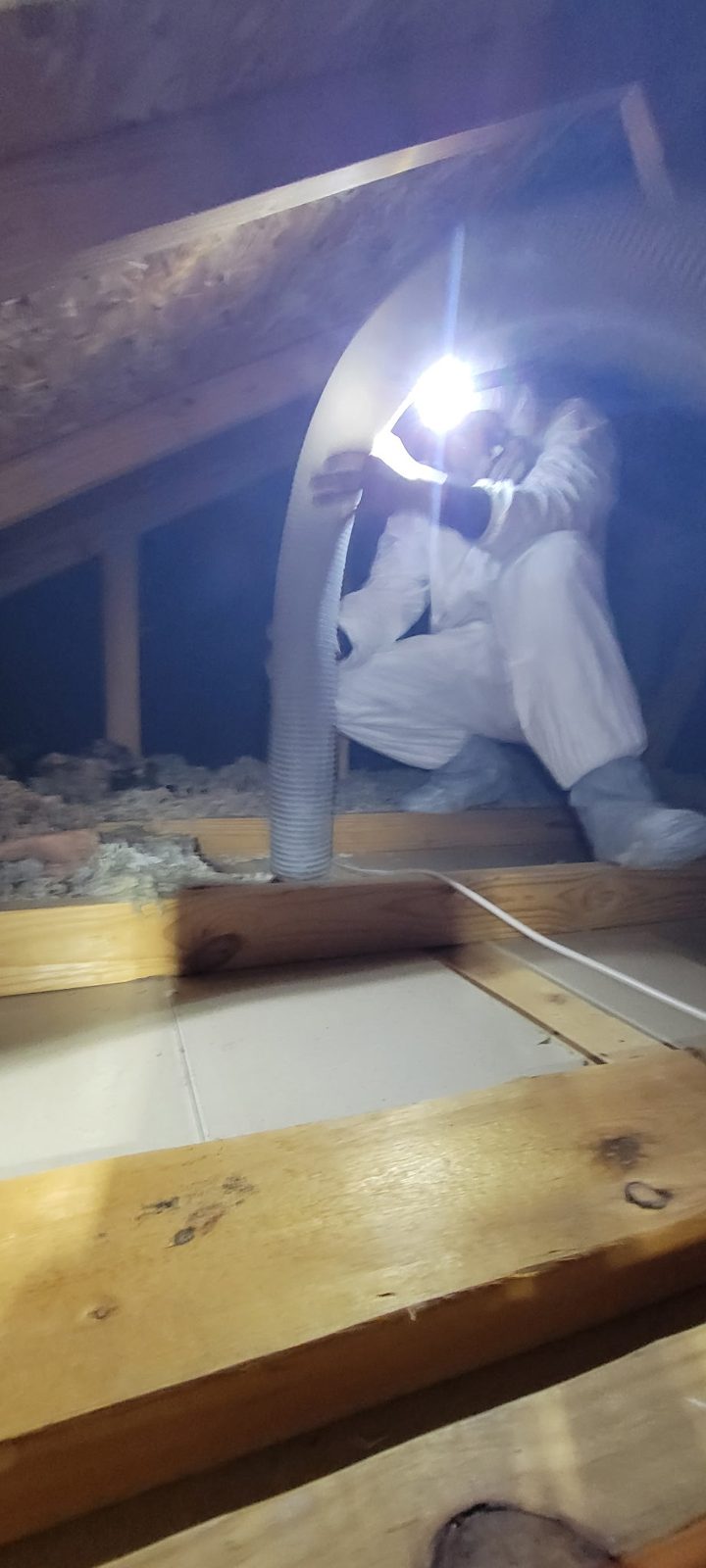
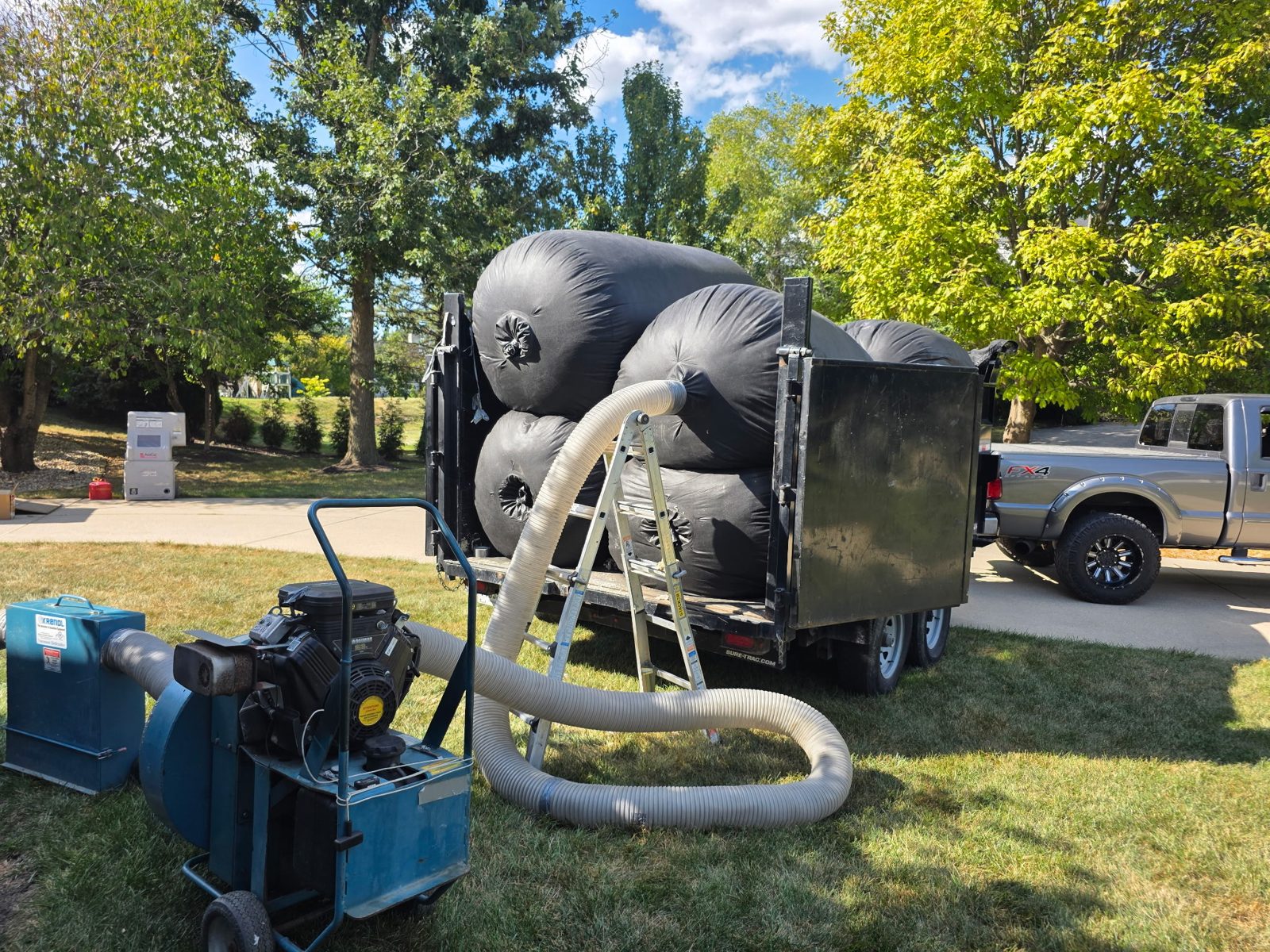
We use a HEPA-filtered insulation vacuum - an industrial unit, vacuum hose run from the truck up through a window or hatch into the attic - and remove insulation in controlled passes into sealed bags. Loose-fill cellulose and fiberglass come out first; batt insulation is rolled, bagged, and removed by hand. Contaminated material is double-bagged at the attic, sealed, and removed from the property the same day.
Once the insulation is out and the deck is exposed, we vacuum the framing and decking, then apply an enzymatic decontamination product across the affected area. Enzymatic treatment breaks down organic residues and odor-producing compounds at the source. We don’t use perfumed maskers. The deck is left to dry, inspected, and any structural repair (chewed wiring, damaged decking, saturated rafters) is identified at this stage and either handled by us or referred to the homeowner’s roofer or general contractor before we re-insulate.
Getting the attic back to code
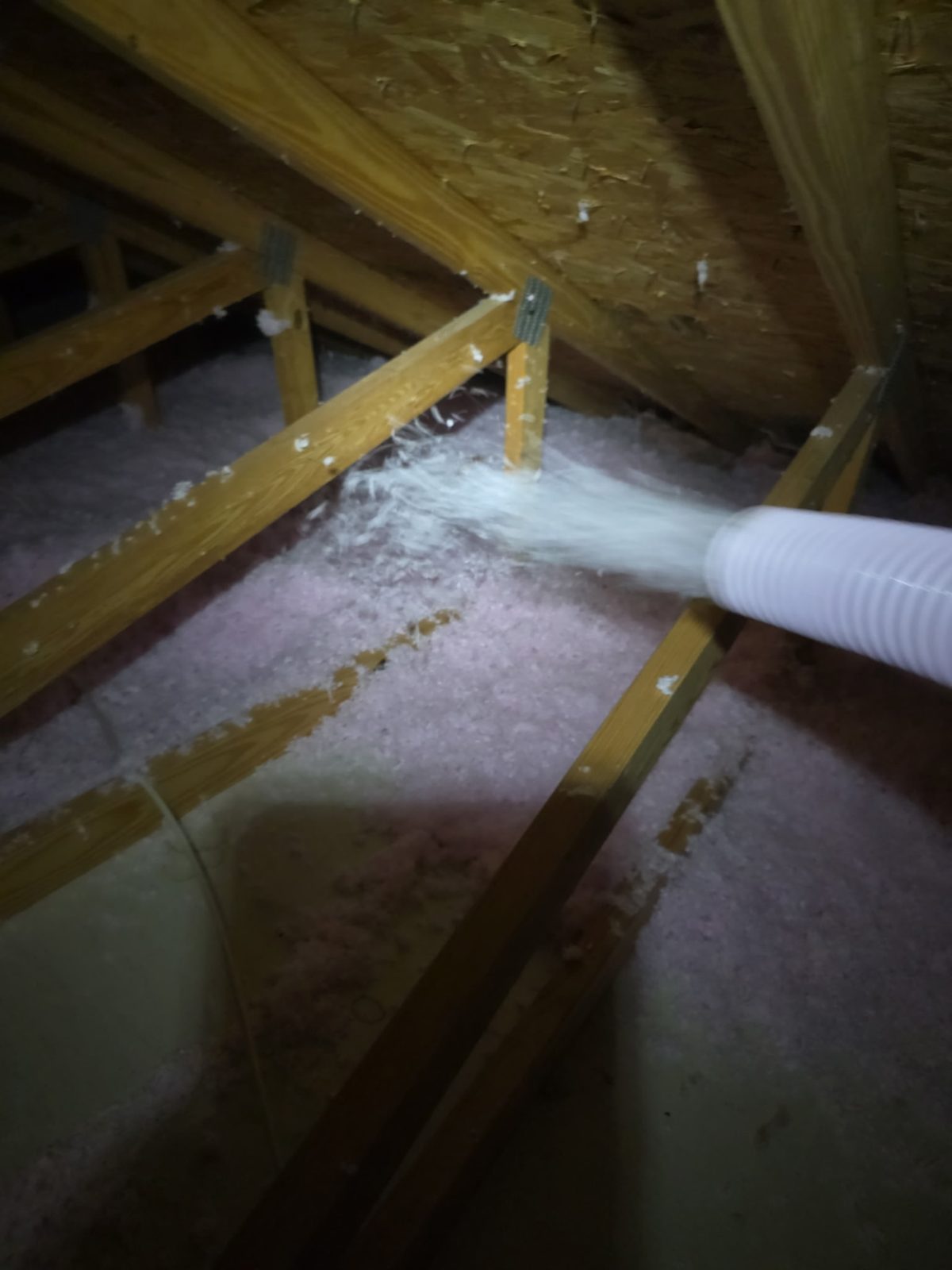
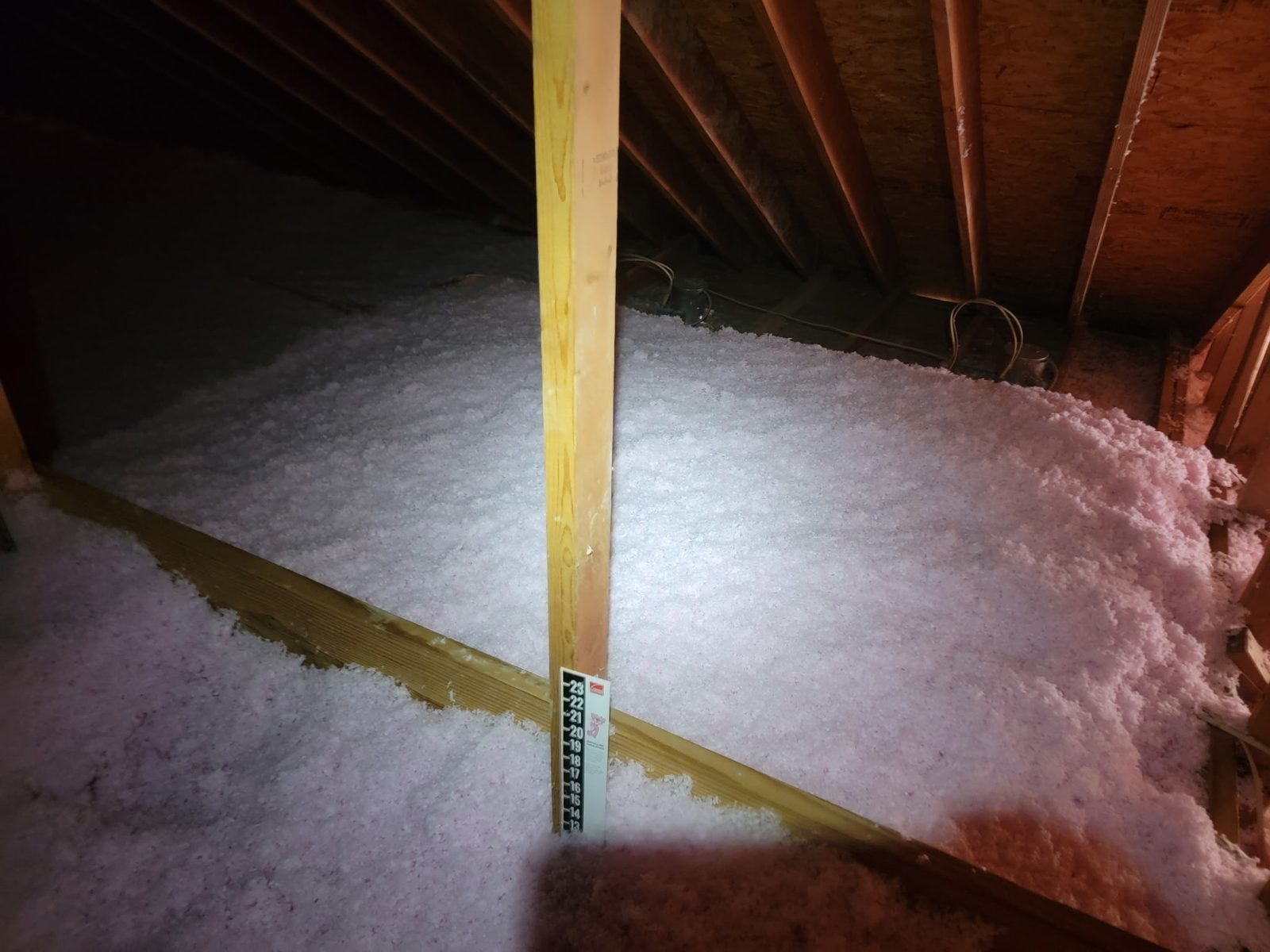
Re-insulation in central Indiana targets R-49 in most attics under current Indiana Residential Code. That is typically achieved with blown cellulose or blown fiberglass to the appropriate depth, with attic baffles installed at the eaves to maintain soffit ventilation. On older homes with limited rafter depth or low-slope sections where R-49 isn’t physically achievable, the code minimum drops to R-38, and we will note that on the quote and explain why.
Blown cellulose is what we use most often - good thermal performance, settles predictably, treated for fire and pest resistance. Blown fiberglass is the alternative for homes with specific moisture profiles or where the homeowner has a preference. We do not do spray foam as part of standard remediation re-insulation; if a homeowner wants foam, we refer them to a foam specialist after the decontamination work is complete.
Most homeowner policies cover this work
When the contamination is tied to a covered wildlife event - a documented raccoon intrusion, a bat colony established through a roof line breach, rodent damage following a covered storm - most central Indiana homeowner policies cover decontamination and re-insulation as part of the claim. We work directly with the customer’s insurance carrier and adjuster. We document the contamination with photos, scope the work in writing, and provide line-item invoicing that adjusters expect to see.
We do not handle the claim for the homeowner - that’s your relationship with your carrier - but we make sure the documentation is what they need. On larger losses, we coordinate with the homeowner’s roofer or general contractor so structural repair, decontamination, and re-insulation happen in the right order without any one trade redoing another’s work.
Our process
-
01
Attic inspection & scope
We confirm the wildlife is fully out and any exclusion work is complete. We inspect the attic in PPE, document the contamination type and load, identify latrines or guano deposits, and note any structural damage or chewed wiring.
Day 1 -
02
Written quote + insurance docs
You get a line-item written quote covering removal, decontamination, structural notes, and re-insulation to target R-value. If you’re filing a claim, we structure the documentation the way adjusters expect to receive it.
On the job -
03
Containment & removal
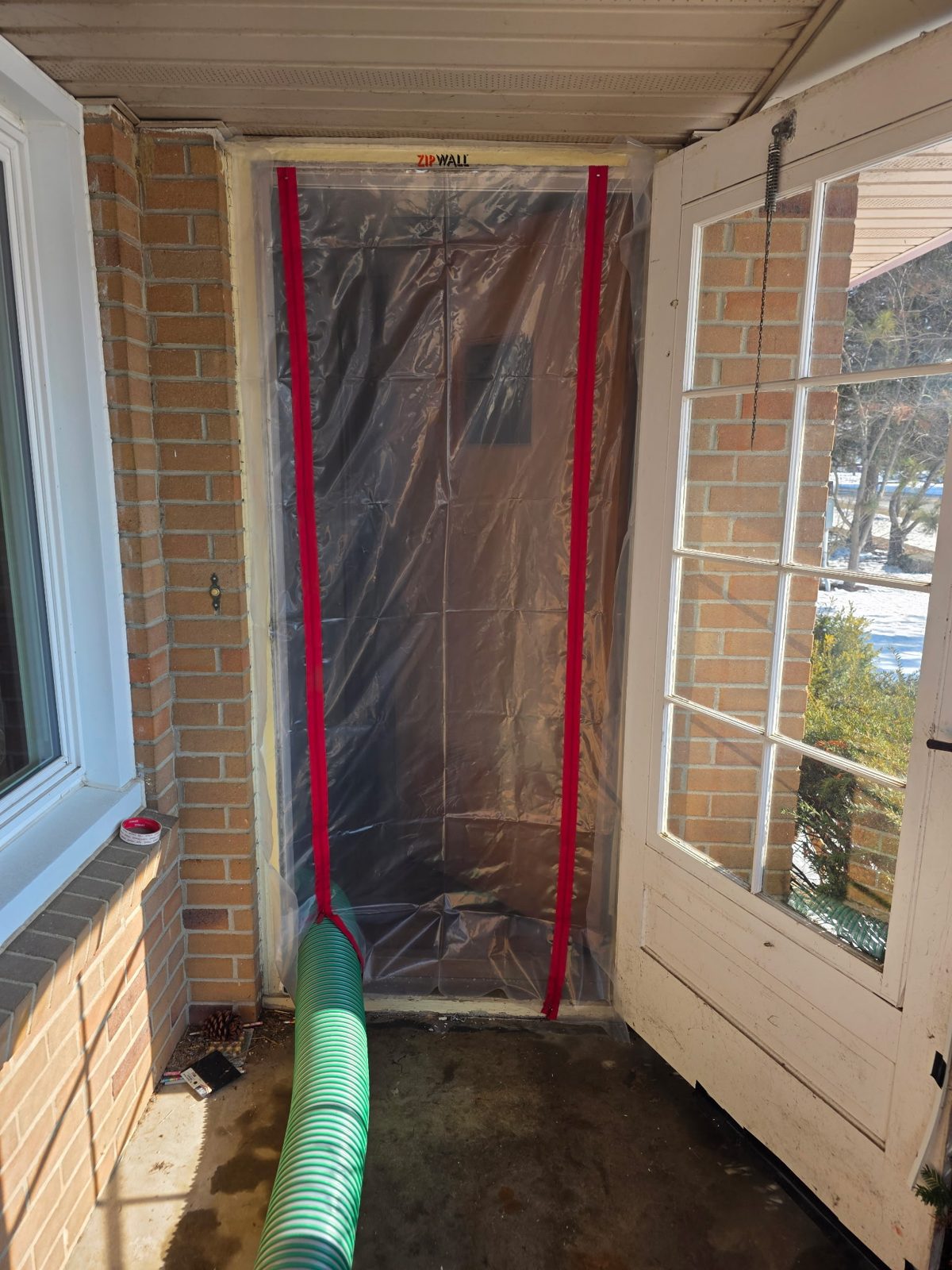
Full PPE, HEPA-filtered insulation vacuum, contaminated material double-bagged at the attic and removed same day. We protect the path from access to truck with floor covering and we vacuum the work corridor at the end of each day.
On the seal -
04
Decontamination & structural handoff
Framing and decking vacuumed, enzymatic decontamination applied. If structural repair is needed, we identify it now and coordinate with your roofer or contractor before re-insulation goes in. Putting new insulation over unrepaired damage is a mistake we don’t make.
Before we leave -
05
Re-insulation to code 2-yr warranty
Blown cellulose or fiberglass to R-49 (R-38 minimum on attics where R-49 isn’t physically achievable), eave baffles installed, depth confirmed at multiple measurement points. Final inspection photos and warranty paperwork at job close.
Final visit
Our actual work, not stock photos
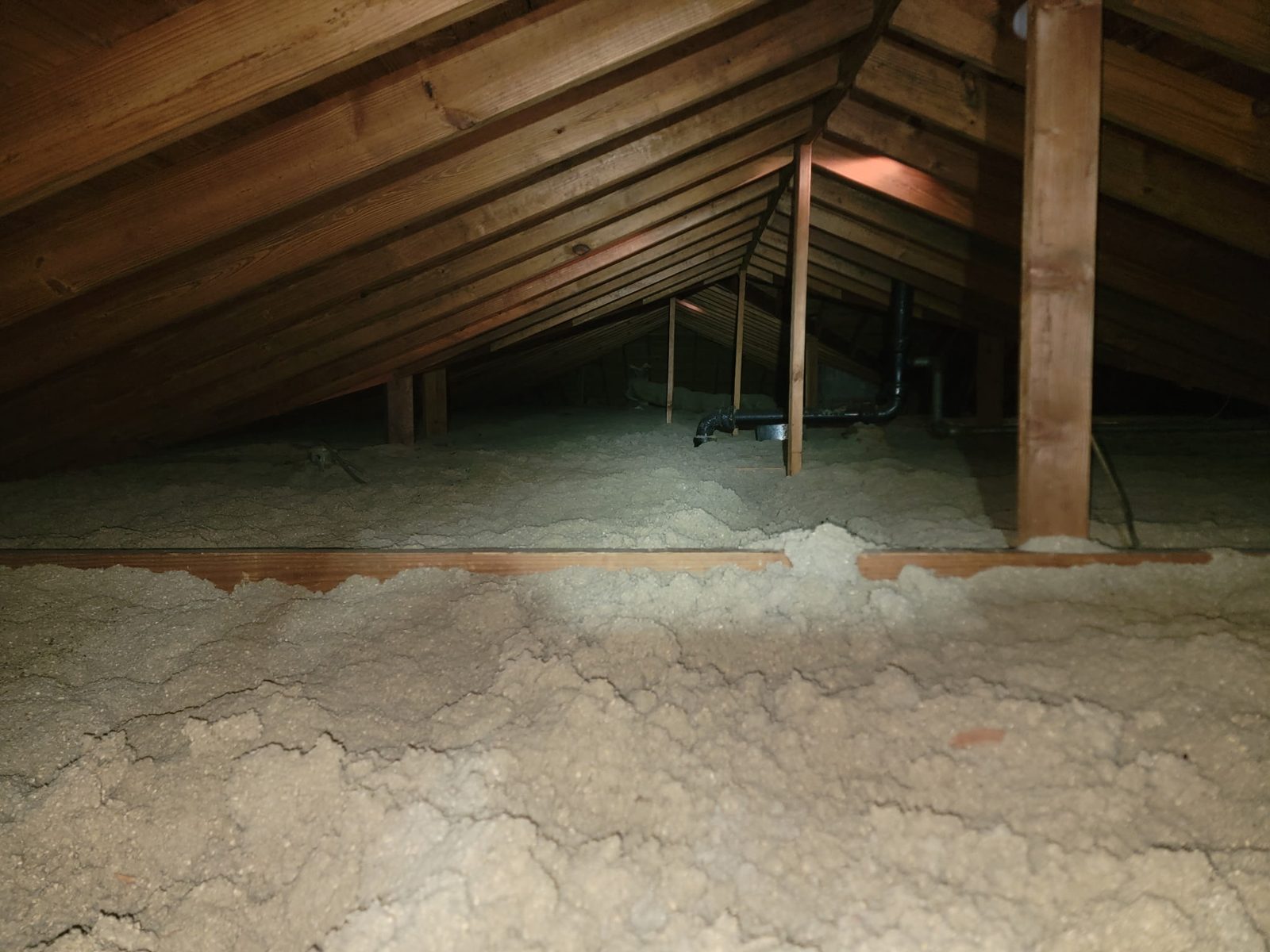
Every photo below is from a real central Indiana attic we restored - contaminated insulation out, decontamination, air-sealing, and fresh insulation blown to code depth.
Real ranges for central Indiana
Remediation pricing varies more than any other service we offer because the contamination load varies more. A small localized latrine in a corner is not the same job as a whole-attic bat-guano clearance.
| Scope | Range |
|---|---|
| Localized latrine cleanup, no full insulation removal | Typically $3,000 - $6,000 |
| Partial attic decon + re-insulation (1-2 sections) | Typically $3,000 - $6,000 |
| Typical full-attic decon + re-insulation, 1,200-2,000 sq ft | Typically $3,000 - $6,000 |
| Larger home or heavy contamination load (whole attic) | Quoted on-site |
| Insurance documentation packet | Included |
How pricing works: every home is different, so we quote on-site, in writing, before any work starts. As a rule of thumb: trapping starts at $399, most single-story homes come in under $2,000 for complete removal and exclusion, and full attic restorations typically run $3,000 to $6,000. Your free inspection gets you an exact number with no surprises.
Insulation remediation questions
No. If the contamination is localized to a latrine site or a small guano deposit, we can do a targeted removal of that section and leave clean insulation in place. We make that call after the inspection, not before. We will not oversell a whole-attic clear when a section job is the right answer.
Most policies cover decontamination and re-insulation when it’s tied to a covered wildlife event with documentation. Coverage varies by carrier and policy. We provide the documentation adjusters look for; the claim itself is between you and your carrier.
A typical 1,200-2,000 sq ft attic runs one to two working days for removal and decontamination, plus a return visit for re-insulation if structural repair is needed in between. Larger or heavier jobs run three to four days.
Yes in most cases. The attic is contained, the access hatch is sealed when crews aren’t in it, and the removal goes straight to the truck. We tell homeowners with respiratory conditions, infants, or immunocompromised family members to spend the active removal day elsewhere as a precaution.
No. This service is specifically post-wildlife remediation. If you want a straight insulation upgrade with no wildlife history, you’ll be better served by an insulation-only contractor and we’re glad to point you to one.
Get the attic back to where it should be.
We’ll inspect, document the contamination, and give you a written quote with insurance paperwork built in.
Wildlife coverage across central Indiana
Source & further reading: ENERGY STAR on attic sealing and insulation, CDC on Baylisascaris procyonis.